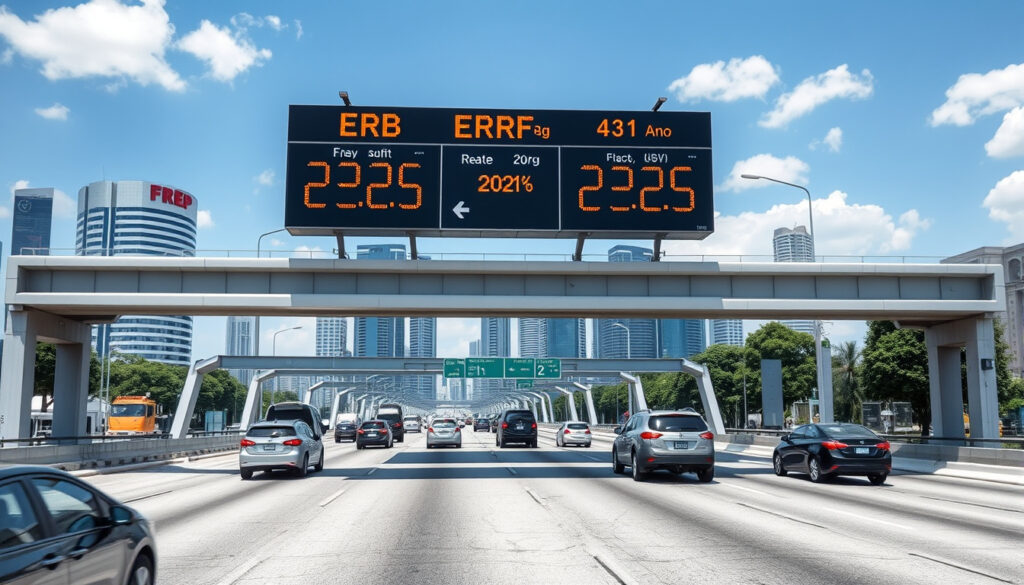
ERP Timing and Rates 2026: Guide for Singapore Drivers
If you drive in Singapore, you’ve probably found yourself glancing at the clock more often than your speedometer, wondering whether that next gantry is live. ERP rates and timing change quarterly, and the 2026 updates have brought fresh adjustments that could hit your wallet harder than expected.
ERP gantries in Singapore: 70+ ·
Car ERP rate range per gantry: S$0.50 to S$6.00 ·
Foreign car flat daily fee: S$5 during ERP hours
Quick snapshot
- Operates on weekdays during peak hours — LTA OneMotoring
- Varies by gantry — LTA OneMotoring
- Free on most weekends — LTA OneMotoring
- Cars: S$0.50–$6.00 per pass — LTA OneMotoring
- Motorcycles: half rate — LTA OneMotoring
- Foreign cars: flat S$5/day — LTA OneMotoring
- OneMotoring official site — LTA OneMotoring
- Breeze app — LTA OneMotoring
- Third‑party aggregators — The Smart Local
- Travel in free periods — LTA OneMotoring
- Avoid peak CTE/PIE gantries — Smart Calculator
- Carpool to share costs — The Smart Local
| Fact | Detail | Source |
|---|---|---|
| Number of gantries | 70+ | LTA OneMotoring |
| Car rate range | S$0.50 – S$6.00 | LTA OneMotoring |
| Foreign car daily rate | S$5 | LTA OneMotoring |
| Free period | Before 7am & after 8pm on weekdays; all weekends | LTA OneMotoring |
What time is ERP timing?
ERP operates during morning and evening peak hours on weekdays, with specific timing varying by gantry and expressway. The Land Transport Authority (LTA) sets these windows to manage congestion on key routes.
When does ERP start in the morning?
Weekday morning ERP typically starts as early as 7:00 am, according to Smart Calculator. The morning peak runs from 7:00 am to 9:30 am on most expressways and arterial roads.
When does ERP end in the evening?
Evening ERP timing often runs from 5:30 pm to 8:00 pm on northbound and outbound corridors, as reported by Smart Calculator. The The Smart Local notes that as of January 2026, ERP operated only from Mondays to Saturdays, starting as early as 7 am and ending by 8 pm.
The implication: drivers on the CTE or PIE face the tightest windows, with rates climbing steeply during these peak blocks.
What are the ERP rates?
ERP rates are adjusted quarterly by LTA to reflect traffic conditions. The LTA OneMotoring site lists the active rates as “ERP Rates with effect from 2 June to 28 June 2026”.
ERP rate for cars
Car rates range from S$0.50 to S$6.00 per gantry, according to LTA OneMotoring. A typical CBD-bound peak commute crosses 2–4 gantries and costs S$6–$12 one-way, per Smart Calculator.
ERP rate for motorcycles
Motorcycles pay half the car rate, as confirmed by LTA OneMotoring.
Foreign car flat rate
Foreign cars pay a flat S$5 per day during ERP hours, per LTA OneMotoring.
The pattern: rates outside peak windows typically drop to S$0.50–$1.50, then S$0 outside the operating window, as Smart Calculator reports.
What time is ERP free?
ERP is generally free after 8pm and before 7am on weekdays. Most gantries are free on weekends and public holidays, though some gantries near major attractions may still charge on weekends.
Weekend ERP schedule
ERP charges are not applied on Sundays and all public holidays, according to LTA OneMotoring. Smart Calculator adds that Sundays and public holidays have no ERP except select CBD locations.
Public holiday ERP
ERP stops operating at 1 pm on the eve of New Year’s Day, Chinese New Year, Hari Raya Puasa, Deepavali, and Christmas Day, per LTA OneMotoring.
The catch: even on free days, drivers without an IU or OBU face a S$70 penalty per gantry crossed, as LTA OneMotoring warns.
How to check ERP rate?
Checking ERP rates before you drive can save you money and frustration. Here are the official and reliable methods.
Using OneMotoring website
The LTA OneMotoring website provides official ERP rates and operating hours. It lists the active rates with effect from specific dates, such as “2 June to 28 June 2026”.
Using mobile apps like Breeze
The Breeze app allows live ERP rate lookup and route planning, as noted by LTA OneMotoring.
Checking ERP gantry list
Third‑party sites like The Smart Local and Smart Calculator also list rates by gantry, though the official source remains LTA. For the most up-to-date information on Singapore’s ERP system, consult the ERP timing and rates 2026.
What this means: using the OneMotoring site or Breeze app ensures you have the most current data, especially after quarterly revisions.
How to plan your routes around ERP timings and save on costs?
Strategic route planning can significantly reduce your ERP expenses. Here are actionable steps.
- Check the latest ERP rates on LTA OneMotoring before your trip.
- Identify peak hours for your route using the Breeze app or Smart Calculator.
- Time your trip 15–30 minutes before or after peak to save S$2–S$5 per gantry.
- Use alternative routes that avoid high-cost gantries on CTE and PIE.
- Carpool to share ERP costs among passengers.
- Travel during free periods — before 7am, after 8pm on weekdays, or on weekends.
Avoid peak hours on CTE and PIE
CTE and PIE have some of the highest ERP rates, according to Smart Calculator. The LTA newsroom announced that ERP rates at selected locations would increase by S$1.00 with effect from 29 June 2026 to manage congestion.
Use alternative routes
Free ERP periods are ideal for long distance trips. Timing your trip 15–30 minutes before or after peak can save S$2–S$5, as Smart Calculator notes.
Carpool or use ERP‑free roads
Carpooling to share costs is a practical strategy, as suggested by The Smart Local.
The pattern: drivers who adjust their commute by even 15 minutes can save hundreds of dollars annually.
“All Singapore-registered vehicles must install either an IU or an OBU to drive through operating ERP gantries.”
“LTA said there would be a school holiday discount of ERP rates at six locations for 18 specified time periods during the June school holiday period from 2 June to 28 June 2026.”
Bottom line: Singapore drivers who check ERP rates on LTA OneMotoring and adjust their travel times by 15–30 minutes can save S$2–S$5 per trip, avoiding the steepest charges on CTE and PIE.
Warning: If a vehicle without an IU or OBU drives through an operating ERP gantry, the penalty is S$70 for each gantry crossed, per LTA OneMotoring.
Tip: Use the Breeze app for live ERP rate lookup and route planning to avoid unexpected charges, as recommended by LTA OneMotoring.
To pay these tolls smoothly, you’ll need the EZ-Link Motoring card needed for ERP, which must be topped up before passing through any gantry.
Frequently Asked Questions
What is Electronic Road Pricing (ERP)?
Singapore’s Electronic Road Pricing (ERP) system was introduced in 1998 to manage traffic congestion, according to LTA OneMotoring.
How does an ERP gantry work?
ERP gantries deduct charges automatically from a vehicle’s In-Vehicle Unit (IU) or On-Board Unit (OBU) when the vehicle passes through during operating hours, per LTA OneMotoring.
Can I pay ERP with a credit card?
No, ERP charges are deducted from the cash card in your IU or OBU. Credit cards are not accepted for direct ERP payment, as stated by LTA OneMotoring.
Are motorcycles charged the same as cars?
No, motorcycles pay half the car rate, according to LTA OneMotoring.
What happens if my In‑Vehicle Unit (IU) has insufficient cash?
If your IU has insufficient cash, you will receive a notice to pay the outstanding amount plus an administrative fee, as explained by LTA OneMotoring.
How can I appeal an ERP charge?
You can appeal an ERP charge through the LTA website or by contacting their customer service, per LTA OneMotoring.
Are there any exemptions for ERP?
ERP charges are not applied on Sundays and all public holidays, and ERP stops operating at 1 pm on the eve of certain holidays, according to LTA OneMotoring.
For more information on driving in Singapore, see our guide on Cheapest Car Rental Singapore: Rates from $45/Day and our report on E-Bike Violations in Potong Pasir: What Happened and the Rules.
More related posts
 Choa Chu Kang Columbarium Guide: Booking, Costs & Rules
 Three Meals a Day Singapore: Menu, Halal Status & Budget Guide
 How to Get Rid of a Yeast Infection in 24 Hours: Fast Relief Guide
 Moltres & Zapdos & Articuno GX: Prices & Variants Guide
 Marie’s Lapis Cafe Menu: Nyonya Peranakan Dishes & Prices
 What Is Good Friday? Meaning, History & Traditions
 Best Mobile Plan Singapore 2026: Compare Coverage & Costs
 Dog Grooming Near Me: Prices, Tips & Ireland Salons
