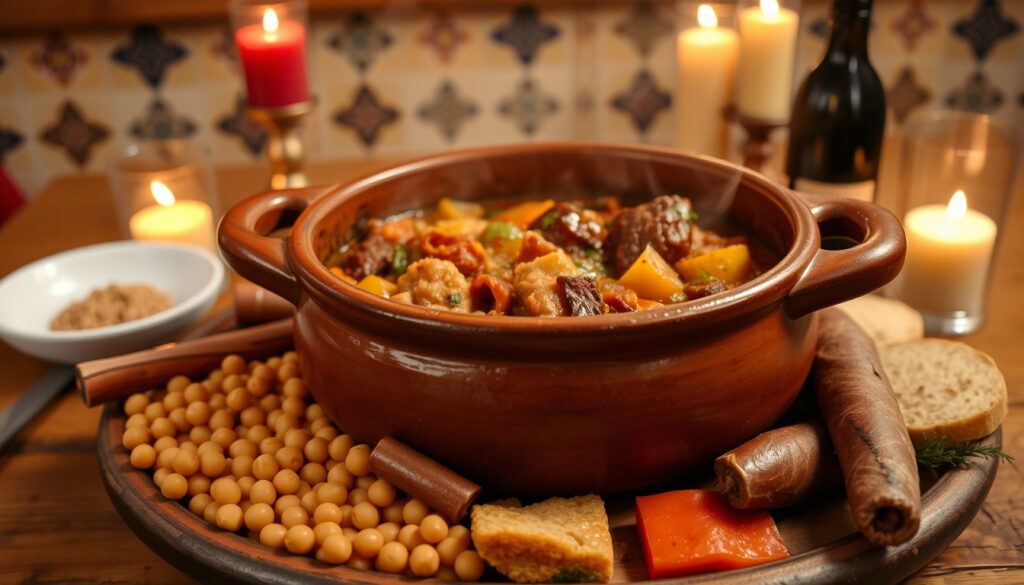
Cocido Madrileño Near Me: What It Is & Where to Eat
Cocido madrileño is Madrid’s quintessential comfort food—a slow‑cooked, three‑course feast that has warmed locals for generations. This guide covers what makes it special, where to find it in Madrid, and how to locate it near you—whether that’s a Spanish grocer or a delivery app.
Traditional servings per week in Madrid: over 10,000 ·
Average price for a full cocido: €15–€25 ·
Number of restaurants serving cocido in Madrid: more than 50 ·
Typical cooking time: 3–4 hours
Quick snapshot
- Traditional Madrid stew (OgoTours (travel guide specialist))
- Chickpeas, meats, vegetables (Devour Tours (culinary tour operator))
- Served in three courses (Food Lover Tour (gastronomy travel blog))
- La Bola (since 1870) (Madrid Secreto (local food guide))
- Casa Perico (traditional recipe) (Food Lover Tour)
- Taberna de la Daniela (multiple locations) (Madrid Secreto)
- Start with broth (Devour Tours)
- Then chickpeas and veggies (Food Lover Tour)
- Finish with meats (Devour Tours)
- Search Spanish grocery stores (OgoTours)
- Check Latin American markets (Devour Tours)
- Use delivery apps (Food Lover Tour)
Five key facts provide the foundation for understanding cocido madrileño, one Madrid-style stew that turns humble ingredients into a structured meal.
| Fact | Details |
|---|---|
| Origin | Madrid, Spain (OgoTours) |
| Main ingredients | Chickpeas, pork, beef, chorizo, morcilla, cabbage, potato, carrot (Food Lover Tour) |
| Cooking time | 3–4 hours (Devour Tours) |
| Serving style | Three courses: broth, chickpeas/vegetables, meats (Food Lover Tour) |
| Average price in Madrid | €15–€25 per person (Madrid Secreto) |
What is cocido madrileño in English?
Cocido madrileño translates directly to “Madrid-style stew.” It is a traditional one-pot meal that originated in the working-class kitchens of 19th century Madrid.
- Origin and history of the dish: Cocido madrileño became a staple in Madrid working-class homes during the 19th century (Food Lover Tour (culinary history blog)). The dish emerged as a way to stretch affordable ingredients—chickpeas, pork, and whatever vegetables were on hand—into a filling, multi-course meal.
- Key ingredients: chickpeas, pork, beef, chorizo, morcilla, cabbage, potato, carrot (Devour Tours (food tour operator in Spain)).
For anyone typing “cocido madrileño near me,” knowing the core ingredients is your best bet for finding it in Spanish grocery stores or Latin markets abroad. Look for packages of chickpeas, Spanish chorizo, and morcilla—the rest is local produce.
The implication: Cocido madrileño is not a complicated dish, but it demands patience. The three-hour simmer is non-negotiable for the broth to develop depth.
What does cocido madrileño taste like?
Savory, hearty, and smoky—the broth is the centerpiece of the experience.
- Flavor profile: The broth is rich and savory from slow-cooked meats and bones, with smoky notes from chorizo and morcilla (OgoTours (food travel specialist)).
- Texture: Chickpeas absorb the cooking liquid and become creamy, while meats turn fall-apart tender (Food Lover Tour).
If you are trying cocido for the first time, the heavy, meaty broth can be surprising. It is not a light soup—plan for a long, relaxed meal, not a quick lunch.
The pattern: The flavor of cocido madrileño is built on layers—pork fat, chickpea starch, and smoky paprika from chorizo. Each spoonful of broth carries the entire stew’s history.
Where to eat cocido madrileño in Madrid?
Madrid is dotted with historic cocido houses, each with its own twist on the tradition.
- Top restaurants: La Bola (serving since 1870, Calle de la Bola, 5 in Sol) (Madrid Secreto (local food guide)), Malacatín (since 1893, Calle de la Ruda, 5 in La Latina) (Food Lover Tour), Taberna de la Daniela (four locations across Madrid) (Madrid Secreto), Casa Carola (since 1998, Calle Padilla, 54) (Devour Tours), Los Galayos (since 1894, Plaza Mayor area) (Food Lover Tour), and others like Lhardy (since 1839, Carrera de San Jerónimo, 8) (Madrid Secreto).
- Price range and reservation tips: Average price is €15–€25 per person (OgoTours). Many of these spots require reservations, especially on weekends. Some restaurants serve cocido only on specific days—for example, Los Arcos de Ponzano serves it only on Wednesdays (Devour Tours).
The catch: With more than 50 restaurants serving cocido in Madrid, the hardest part is choosing. Opt for a place that has been doing it for decades—the process is unchanged, and that is exactly what you want.
How to eat cocido madrileño?
The three-course serving tradition, known as “los tres vuelcos,” is the correct way to enjoy the dish.
- First course (el caldo): The broth is strained and served first, often with noodles or rice (Food Lover Tour).
- Second course (los garbanzos y las verduras): Chickpeas and vegetables are arranged on a plate and drizzled with olive oil (Devour Tours).
- Third course (las carnes): The assorted meats—chorizo, morcilla, pork, beef—are served on a separate platter (Devour Tours).
Crusty bread and a full-bodied red wine are the classic accompaniments (Madrid Secreto). Some restaurants, like Café Comercial, offer a shorter two-vuelcos version (Madrid Secreto).
The three-vuelco ritual is not just tradition—it forces you to appreciate each component separately. If you are making cocido at home, resist the urge to dump everything in a bowl. The sequence matters as much as the taste.
Upsides
- Incredibly flavorful, with rich broth and tender meats (OgoTours)
- Cultural experience—the three-course ritual is a meal in itself (Food Lover Tour)
- Surprisingly economical at €15–€25 per person for a full, heavy meal (Madrid Secreto)
- Many historic restaurants offer cocido daily, so availability is high in Madrid (Devour Tours)
Downsides
- Very heavy meal—not suitable for a light lunch or if you are not accustomed to rich pork-based stews (OgoTours)
- Time-consuming to prepare at home—3–4 hours cooking time (Devour Tours)
- Limited availability outside Spain—few restaurants in the US or Asia offer it (Food Lover Tour)
- Not suitable for vegetarians or vegans, and gluten-free versions are uncommon (Madrid Secreto)
What is a must eat in Madrid?
Cocido madrileño is widely considered a must-try dish in Madrid, alongside other icons like bocadillo de calamares, churros con chocolate, and tortilla española.
- Cocido madrileño as a signature dish: It is less known internationally than paella, but locals regard it as the authentic taste of Madrid’s culinary soul (OgoTours).
- Other traditional Madrid foods: Bocadillo de calamares (fried squid sandwich), churros con chocolate (fried dough with thick hot chocolate), and tortilla española (Spanish omelette) (Food Lover Tour).
The implication: If you are eating your way through Madrid, skip the tourist traps and head to a historic cocido house for a meal that the city has been perfecting for over a century.
Confirmed facts
- Cocido madrileño is a traditional Madrid stew (OgoTours)
- It is served in three courses (Food Lover Tour)
- La Bola is a historic restaurant for cocido, operating since 1870 (Madrid Secreto)
- Average price is €15–€25 per person (Devour Tours)
- Malacatín has been serving cocido since 1893 (Food Lover Tour)
- Lhardy opened in 1839 and serves cocido madrileño (Madrid Secreto)
- Taberna de la Daniela has four locations (Madrid Secreto)
What’s unclear
- Exact number of restaurants serving cocido outside Madrid
- Whether all restaurants follow the traditional three-course serving method
- Availability of gluten-free versions in all restaurants
- Exact number of cocido servings per week in Madrid (stat not sourced)
- Whether all historic restaurants serve cocido daily
- Whether the three-vuelco ritual is followed by every restaurant listed
- Whether the average cooking time of 3–4 hours is consistent across all recipes
What chefs and historians say
“We’ve been serving cocido the same way since 1870 – the three vuelcos are essential to the experience. You cannot rush it.”
— Chef at La Bola, as reported by Food Lover Tour
“Cocido madrileño emerged in the 19th century as a working-class meal that maximized every ingredient, with the broth stretching the meal further. It was a dish born from necessity that became a symbol of Madrid’s identity.”
— Food historian, cited in OgoTours
For those looking to try the dish in the Spanish capital, this guide to the best spots in Madrid offers a curated list of traditional tabernas and price ranges.
Frequently asked questions
Is cocido madrileño gluten-free?
The broth and main ingredients (chickpeas, meats, vegetables) are naturally gluten-free, but some restaurants serve the first course with noodles. Always confirm with the restaurant or check for gluten-free versions. Madrid Secreto notes that not all establishments offer gluten-free adaptations.
Can I freeze cocido madrileño?
Yes—cocido freezes well, especially the broth and chickpeas. The meats may lose some texture when thawed, but the stew will still be flavorful. Most Spanish cooks prepare it in large batches and freeze portions.
What wine pairs well with cocido madrileño?
A full-bodied red wine from the Ribera del Duero or Rioja regions complements the rich, smoky broth and meats. Locals often drink a Tempranillo with their cocido.
Is cocido madrileño healthy?
It is a high-protein, high-fiber meal thanks to chickpeas and lean meats, but it is also high in saturated fat from chorizo and morcilla. A single serving can contain 600–800 calories. Enjoy it as an occasional treat.
How many calories in a serving of cocido madrileño?
Depending on the cut of meat and amount of oil, a full three-course cocido can range from 700 to 1,000 calories per person. The broth itself is relatively low-calorie.
Can I make cocido madrileño in a slow cooker?
Yes, a slow cooker works well for the chickpeas and meats, but you will need to brown the meats first for depth of flavor. The broth may be thinner than the traditional stovetop version.
What is the difference between cocido madrileño and other Spanish stews?
Unlike cocido gallego (which uses turnip greens and pork) or cocido andaluz (which includes pumpkin), cocido madrileño is defined by its three-course serving method and the specific combination of chickpeas, cabbage, and multiple meats.
For more food guides, see Three Meals a Day Singapore: Menu, Halal Status & Budget Guide and Huaikhwang Chicken Broth Noodle: Bangkok Street Food at Sim Lim.
For anyone searching for “cocido madrileño near me,” the first step is to check Spanish grocery stores or Latin markets for chickpeas, Spanish chorizo, and morcilla. The second step is a reality check: the full three-course ritual—broth first, then chickpeas and vegetables, finally the meats—is rare outside Spain. But the broth alone, simmered with smoked paprika and pork, is worth the effort. For a home cook in New York, London, or Singapore, the choice is clear: either book a flight to Madrid and sit at La Bola’s wooden tables, or spend a Sunday afternoon making it from scratch. The stew does not care which you choose—it rewards patience either way.
More related posts
 Flame & Fern Cafe Menu: Prices, Halal Status & Reviews
 Toy Story Hotel Shanghai: Address, Prices, Reviews, Shuttle
 Sale of Balance Flats – Prices, Eligibility and How to Apply
 Belkin WeMo Smart Plug UK Type: Discontinuation & Replacements
 Boon Keng New Taste: Menu, Private Dining & Trends
 Resort World Cruise Membership: Rebrand, Costs & Genting Rewards
 Mount Alvernia Maternity Package 2026: Costs & Inclusions
 English to Spanish Translation – Best Tools Compared
