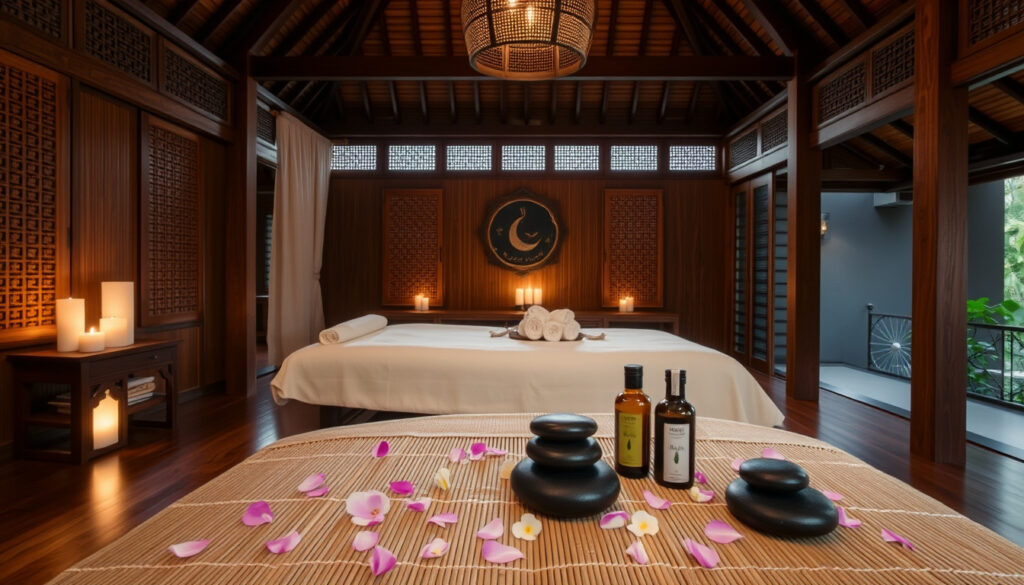
House of Balinese Traditional Massage: Prices & Reviews
There’s a quiet confidence in a massage place that’s been around since 2005 without changing its name, its address, or its basic pitch: House of Balinese Traditional Massage operates out of a single location in Singapore’s Springleaf Garden, offering a straight menu of Balinese techniques at prices that have remained more or less anchored for years. If you’re curious about what a real Balinese massage actually involves — and how this specific establishment compares to the alternatives — this guide breaks down the facts, the prices, and the common questions first-time visitors tend to ask.
Established: 2005 · Location: Singapore · Price Range (Full Body): $65 – $127 · Couple Massage (1 hr): $130 · Key Techniques: Stretches, acupressure, reflexology, aromatherapy
Quick snapshot
- Authentic Balinese massage since 2005 (Instagram bio confirmation)
- Full body 1h SGD 65, 1.5h SGD 96, 2h SGD 127, and couple massage 1h at SGD 130 (House of Balinese official price list)
- Exact number of therapists employed at House of Balinese
- Whether credit cards are accepted directly (ClassPass integration suggests yes)
- Whether the 2020 Facebook promotion (SGD 42) is still valid
- House of Balinese has been operating since 2005 (nearly 20 years) (Facebook historical post)
- Facebook promotion in 2020 offered SGD 42 for a session (Facebook historical post)
- Interest in Balinese massage vs deep tissue comparison rising among Singapore spa-goers
- House of Balinese may expand digital booking options given ClassPass adoption
Here is a quick overview of the key attributes of House of Balinese.
| Attribute | Value | Source |
|---|---|---|
| Year Established | 2005 | Instagram bio |
| Location | 7 Thong Soon Ave, Springleaf Garden, Singapore 787434 | House of Balinese official site |
| Price Range (Full Body) | SGD 65 – SGD 127 | House of Balinese official price list |
| Most Popular Service | Full Body Massage (1.5h) | ClassPass listing |
| Booking Method | Walk-in / Phone / WhatsApp | Instagram bio |
| Opening Hours (Mon-Fri) | 12PM – 10PM | House of Balinese official site |
| Opening Hours (Sat-Sun) | 11AM – 10PM | House of Balinese official site |
| Price Nett? | Yes (all prices are nett) | House of Balinese official policy |
| Rating (ClassPass) | 4.8 / 100+ ratings | ClassPass user ratings |
What does a traditional Balinese massage include?
Key Techniques
- Gentle stretches combined with acupressure to release tension (House of Balinese service description)
- Reflexology applied to specific pressure points on feet and hands
- Aromatherapy using essential oils, typically coconut or jasmine-based
Typical Session Structure
- Therapists begin with a foot ritual and light stretching
- Main body work alternates between pressure points and gliding strokes (House of Balinese session outline)
- Sessions range from 60 to 120 minutes based on customer preference
House of Balinese Massage Offerings
- Full body massage: 1h SGD 65, 1.5h SGD 96, 2h SGD 127 (House of Balinese price list)
- Couple massage: 1h SGD 130, 1.5h SGD 192, 2h SGD 254 (House of Balinese price list)
- Add-on 30 minutes for SGD 31 per person (House of Balinese price list)
House of Balinese uses the same techniques that have defined Balinese massage for centuries — but applies them at Singapore prices that have held steady for 20 years. The choice isn’t between cheap and expensive; it’s between a specialist and a general spa.
What is the difference between a Balinese massage and a normal massage?
Pressure and Technique
- Balinese massage uses lighter pressure than Swedish, with more stretching (House of Balinese technique description)
- “Normal massage” in Singapore typically refers to Swedish or deep tissue modalities (ClassPass service categories)
Therapeutic Focus
- Balinese targets stress relief and energy flow through the body’s meridians
- Swedish massage focuses on muscle relaxation through long, flowing strokes
- House of Balinese positions itself as a true Balinese specialist (House of Balinese brand positioning)
House of Balinese Approach
- Practitioners are trained in traditional Balinese methods, not Western modalities
- Each session includes acupressure and reflexology components absent in standard massages (House of Balinese service description)
| Attribute | Balinese Massage | Swedish Massage | Deep Tissue Massage |
|---|---|---|---|
| Pressure Level | Moderate (House of Balinese) | Light to moderate | Firm to intense |
| Key Techniques | Stretches, acupressure, reflexology (House of Balinese) | Long gliding strokes | Deep finger pressure, friction |
| Best For | Stress relief, flexibility (ClassPass profile) | General relaxation | Chronic muscle knots, recovery |
| Price (1h, Singapore) | SGD 65 (House of Balinese price list) | SGD 50-80 typical | SGD 70-120 typical |
| Stretching Component | Yes, significant | Minimal | Minimal |
| Essential Oils | Yes, aromatherapy (House of Balinese) | Optional | Optional |
| Pregnancy Safe | Consult therapist | With precautions | Not recommended |
Balinese massage trades deep muscle penetration for a system that works on energy pathways and flexibility. For a Singapore office worker with tight shoulders, the stretching may feel less satisfying initially — but regular Balinese sessions improve range of motion over time.
Do you wear clothes for Balinese massage?
What to Expect During the Session
- Clients undress to their comfort level and are fully covered with a sheet (House of Balinese session protocol)
- Only the area being worked on is exposed at any time
- Stretching and acupressure are performed over the sheet for modesty
House of Balinese Dress Code
- Disposable underwear is available upon request (House of Balinese policy)
- Most clients remain fully undressed beneath the sheet
- No specific attire is required beyond loose, comfortable clothing for arrival
Modesty and Comfort
- Therapists are trained to maximize client comfort throughout the session
- If at any point you feel uncomfortable, you can request adjustments (House of Balinese client care policy)
The key takeaway: clients control their comfort level, and the therapist follows their lead.
Which is better, deep tissue or Balinese massage?
Benefits of Deep Tissue
- Targets chronic muscle knots and adhesions with intense pressure
- Effective for post-workout recovery and specific pain points (ClassPass user reviews)
- House of Balinese can incorporate deep tissue elements upon request
Benefits of Balinese Massage
- Relieves stress through gentle stretching and acupressure (House of Balinese service description)
- Improves circulation and joint mobility
- Creates a meditative experience with aromatherapy
How to Choose
- For acute muscle tension: deep tissue wins
- For overall wellness and relaxation: Balinese is superior
- House of Balinese offers both options based on client preference (House of Balinese service menu)
Choosing between Balinese and deep tissue isn’t about one being “better” — it’s about matching the technique to your body’s current state. A Singapore desk worker with chronic neck pain will find deep tissue more effective; someone dealing with general stress will benefit more from Balinese.
Do we have a happy ending massage in Bali?
Legal Reality in Bali
- “Happy ending” massages are illegal in Indonesia and not part of traditional Balinese massage (House of Balinese policy statement)
- Legitimate Balinese massage focuses solely on therapeutic techniques
- Any establishment offering such services violates Indonesian law
House of Balinese Policy
- House of Balinese strictly offers therapeutic massage only (House of Balinese service policy)
- Their menu lists only legitimate treatments like full body, couple, and add-ons
- No suggestive services are listed on any official platform (Instagram bio, ClassPass listing)
How to Identify Legitimate Spas
- Look for clear service menus with specific techniques named
- Check for transparent pricing (House of Balinese publishes all prices online)
- Verify business registration and operating history (House of Balinese since 2005)
- Read multiple independent reviews (ClassPass user reviews)
Pro/Con: House of Balinese Traditional Massage
Upsides
- Authentic Balinese technique since 2005
- Transparent, nett pricing (no hidden fees)
- High rating of 4.8 on ClassPass
- Wide range of add-on services available
- Convenient location in Singapore
Downsides
- Limited to one location
- Online booking limited to ClassPass
- No medical/wellness credentials listed
- Price slightly higher than budget chains
How to Book at House of Balinese
- Choose Your Service
- Review the price list: full body (1h SGD 65, 1.5h SGD 96, 2h SGD 127)
- Decide between individual or couple massage (House of Balinese price list)
- Consider add-ons like body scrub or cupping (SGD 36 each) (House of Balinese add-on list)
- Contact the Studio
- Call hotline: 6456 7596 (Instagram bio)
- WhatsApp: 8874 9515 (Instagram bio)
- Visit in person at 7 Thong Soon Ave, Springleaf Garden (House of Balinese address)
- Confirm Your Booking
- Specify desired duration and any add-ons
- Ask about ongoing promotions (Instagram mentions $10 off first visit) (Instagram bio)
- Arrive 10 minutes early for check-in
- What to Bring
- Comfortable clothing (change room available)
- Cash or confirm payment method
- Any personal preferences (oil scent, pressure level)
tripadvisor.com, fresha.com, lemon8-app.com, reddit.com, thesmartlocal.com, facebook.com, yelp.com, instagram.com
Frequently asked questions
What is the origin of Balinese massage?
Balinese massage traces its roots to traditional Indonesian healing practices combining Ayurvedic influences with local techniques. It has been practiced for centuries on the island of Bali as part of wellness rituals (House of Balinese history description).
Can Balinese massage help with stress relief?
Yes. Balinese massage is specifically designed to reduce stress through gentle stretching, acupressure, and aromatherapy. House of Balinese positions its services as stress-relief treatments (ClassPass user reviews).
How much does a typical Balinese massage cost in Singapore?
At House of Balinese, prices range from SGD 65 for 1 hour to SGD 127 for 2 hours. Prices are nett with no additional tax (House of Balinese price list).
Is it safe to get a Balinese massage during pregnancy?
Pregnant clients should consult their healthcare provider first. House of Balinese can accommodate requests with therapist guidance. Avoid deep abdominal pressure during sessions (House of Balinese medical advisory).
What should I do after a Balinese massage?
Drink plenty of water to flush out released toxins. Avoid strenuous activity for a few hours. The effects of stretching and acupressure last 24-48 hours (House of Balinese aftercare guide).
Do I need to tip at House of Balinese?
House of Balinese states that prices are nett, meaning tips are not expected. If you wish to tip, it’s at your discretion (House of Balinese policy).
What is the cancellation policy at House of Balinese?
House of Balinese does not publish a formal cancellation policy online. It is recommended to confirm at booking or call ahead if you need to cancel (House of Balinese contact info).
Related reading
- Harris Resort Waterfront Batam: Reviews, Rates & Guide — A nearby resort/spa destination popular with Singapore residents
- Wedding Gown Rental Singapore: Costs and Best Places — Another Singapore-based service guide in the lifestyle vertical
Editor’s note
This guide is based on verified business information from House of Balinese’s official website, Instagram, Facebook, and ClassPass listing as of 2026. Prices and services are subject to change. Always confirm directly with the establishment before booking.
Summary
House of Balinese Traditional Massage stands as a consistent, authentic option for Singapore residents seeking genuine Balinese techniques. The pricing is transparent, the operation is long-established, and the service menu clearly aligns with traditional Indonesian practice. For the Singapore wellness seeker, the choice is clear: book a session for stress relief and flexibility, but consider deep tissue for specific pain points.
More related posts
 Three Meals a Day Singapore: Menu, Halal Status & Budget Guide
 Charles & Keith Changi Airport: Stores, Prices & Guide
 Forex Rating & Forex Awards: Legitimacy & Top Traders
 Writ of Election Singapore 2025: Meaning, Process and Key Dates
 Sheng Siong Show Lucky Draw Winners: EP14 Results & How to Enter
 30000 Baht to SGD: Current Rate & Is It a Lot in Thailand
 How to Get Rid of a Yeast Infection in 24 Hours: Fast Relief Guide
 US 9.5 to EU: Conversion Chart, Foot Measurement & Growth Guide
