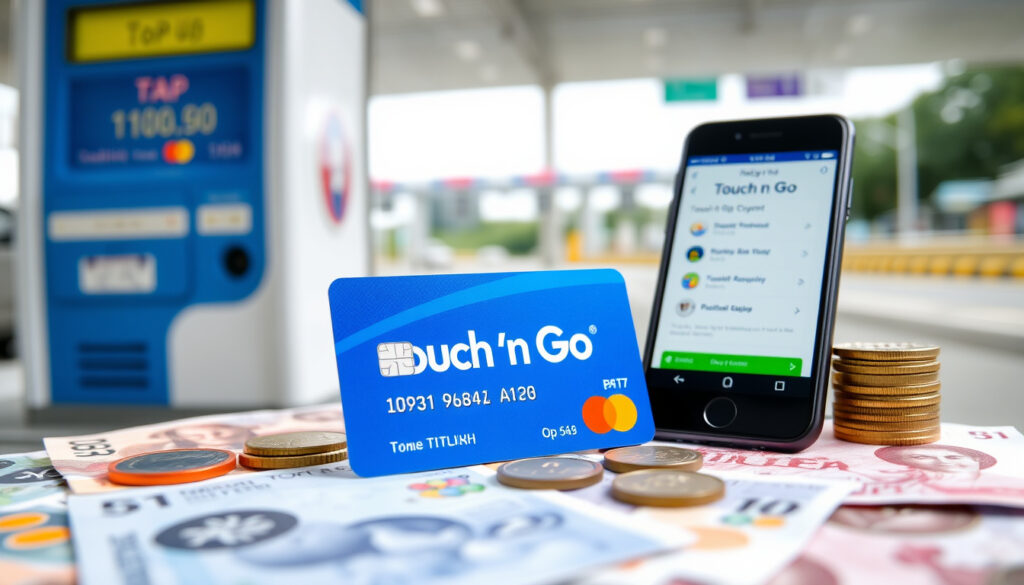
Touch ‘n Go Card Malaysia Guide: Cost, Buy, Top Up & Use
If you’ve ever driven on a Malaysian highway or tapped into an LRT station, you’ve probably seen the familiar yellow Touch ‘n Go card. It’s been the go-to for tolls and transit for decades, but the arrival of the NFC-enabled Enhanced card in 2022 has added a new layer to the story.
Cards Issued (2018): 20 million+ ·
Standard Price: MYR 10 (includes RM5 load) ·
Accepted at: Over 1,000 locations (tolls, LRT, MRT, buses, parking) ·
Enhanced Card Feature: NFC contactless & eWallet integration
Quick snapshot
- Introduced in 1997 by Touch ‘n Go Sdn Bhd (Wikipedia)
- Over 20 million cards issued as of 2018 (Touch ‘n Go Malaysia)
- Standard card costs MYR 10 with RM5 stored value (Paul Tan’s Automotive News)
- Exact number of active cards in 2025
- Future plans for card discontinuation
- Specific retail acceptance outside major cities
- Enhanced NFC card launched April 2022 after delay (SoyaCincau)
- NFC reloads introduced via TNG eWallet app (Touch ‘n Go Malaysia)
- Wider integration with retail merchants and online services
- Possible phasing out of standard cards in favour of enhanced NFC version
| Label | Value |
|---|---|
| Introduced | 1997 |
| Issuer | Touch ‘n Go Sdn Bhd |
| Technology | Contactless smart card (ISO/IEC 14443) |
| Enhanced Version | NFC-enabled, supports eWallet linkage |
| Annual Transactions | Over 1 billion (estimated) |
What is a touch and Go card?
The Touch ‘n Go card is a contactless smart card used for toll payments, public transport, and parking across Malaysia. Introduced in 1997 by Touch ‘n Go Sdn Bhd, it was designed as a quick alternative to cash at highway tolls. It operates on ISO/IEC 14443 near-field communication, the same technology behind many contactless payment systems worldwide (Wikipedia).
What is a TNG card used for?
- Tolls on all PLUS highways and most state toll roads (Touch ‘n Go Malaysia)
- Public transport: LRT, MRT, KTM, Rapid KL buses (Seedly)
- Selected parking lots and retail outlets (Touch ‘n Go Malaysia)
How does a Touch ‘n Go card work?
The card stores a monetary balance on a microchip. When you tap it on a reader at a toll booth or station gate, the fare is deducted instantly. The standard card requires physical contact with the reader, while the Enhanced NFC card can also be reloaded wirelessly by tapping against a smartphone with the TNG eWallet app (Touch ‘n Go Malaysia).
The physical card eliminates the need for a charged phone at the toll booth, but the eWallet offers instant online top-ups. Which you choose depends on whether you value fallback reliability or digital convenience.
Where can I get a physical Touch N Go card?
Touch ‘n Go cards are widely available across Malaysia. The standard card can be bought at official counters at major highways, LRT and MRT stations, convenience stores like 7-Eleven, and petrol stations (Touch ‘n Go Malaysia).
Can I buy a Touch ‘n Go card online?
- Yes, through the TNG eWallet app (orders include a RM5 shipping fee at launch, as reported by Paul Tan’s Automotive News)
- Also available on Shopee and Lazada from official sellers
Where to buy a Touch ‘n Go card in Malaysia?
- Touch ‘n Go counters at major transport hubs
- 7-Eleven, FamilyMart, and other convenience stores
- Petrol stations (Shell, Petronas, Caltex)
- Online via TNG eWallet app (Seedly)
The Enhanced NFC card is available at selected outlets and via the eWallet app (Paul Tan’s Automotive News).
Getting a card is easy – you’ll find them at nearly every station and convenience outlet. The Enhanced card requires a bit more effort to track down, but it’s worth it for the NFC reload feature.
How much does a Touch N Go card cost?
The standard Touch ‘n Go card costs MYR 10, which includes MYR 5 of stored value. The Enhanced NFC card was also launched at MYR 10, with online orders subject to a MYR 5 shipping fee (Paul Tan’s Automotive News).
Does the cost include initial load?
- Yes, the standard card comes with RM5 preloaded (Touch ‘n Go Malaysia)
- The Enhanced card also includes RM5 stored value
Is there a deposit fee?
No, there is no deposit fee. The MYR 10 purchase price is a one-time cost for the card itself. There are no monthly or annual fees (Seedly). Some rail stations have been reported selling older cards at MYR 15 with RM10 preload, but this is not standard (Paul Tan’s Automotive News).
While the card itself has no fees, reloading via the eWallet app is free, but third-party top-up points may charge a small service fee. Check before you reload.
Can I pay with a Touch N Go card?
Yes, the card is accepted at thousands of locations across Malaysia. It remains the primary payment method for highway tolls and most public transit systems (Touch ‘n Go Malaysia).
Where is the Touch ‘n Go card accepted?
- All PLUS toll roads and most state highways
- LRT, MRT, KTM, and Rapid KL bus services (Seedly)
- Selected parking lots (both street and multi-storey)
- Some retail outlets and food courts
Can I use it for online purchases?
No, the physical Touch ‘n Go card is not designed for online payments. For online purchases, you need the Touch ‘n Go eWallet, which can be linked to the Enhanced NFC card for balance top-ups (Touch ‘n Go Malaysia). The eWallet itself can be used at many online merchants in Malaysia.
If you’re a frequent toll user, the physical card is essential. For online shoppers, the eWallet is the better tool. The Enhanced card bridges both worlds but doesn’t replace the eWallet for digital transactions.
Do I need a physical Touch N Go card?
Whether you need the physical card depends on your usage patterns. The physical card works without a phone battery, which is a real advantage at toll plazas or when your phone runs out of juice (Touch ‘n Go Malaysia).
What are the benefits of having a physical card?
- Works even if your phone is dead or offline
- Instant tap-and-go – no app loading required
- Accepted at all tolls and transit systems (Wikipedia)
Touch ‘n Go eWallet vs physical card
The table below compares the three options across key features.
| Feature | Physical Card | eWallet | Enhanced NFC Card |
|---|---|---|---|
| Price | MYR 10 (RM5 loaded) | Free | MYR 10 (RM5 loaded) |
| Reload method | Physical counters or kiosks | Online via app | NFC tap on phone + online |
| Battery needed? | No | Yes (phone) | No (card works independently) |
| Online payments | No | Yes | No (card only) |
| Accepted at tolls | Yes | No (except for RFID) | Yes |
| Accepted on transit | Yes | Yes (selected systems) | Yes |
The implication: the physical card offers reliable offline access, while the eWallet gives you online shopping and easy top-ups. The Enhanced NFC card is a hybrid – it keeps the offline reliability and adds eWallet-linked reloads (Touch ‘n Go Malaysia).
Comparison: Physical card vs Enhanced NFC card vs eWallet
Three options, one pattern: each serves a different primary use case. The table below shows the key differences.
| Aspect | Standard Physical Card | Enhanced NFC Card | TNG eWallet |
|---|---|---|---|
| Technology | Contactless chip | NFC chip + eWallet link | Digital wallet |
| Reload | Counter/kiosk only | NFC via phone + counter | Online (credit/debit/card) |
| Reload fee | May apply at third parties | Free via eWallet app | Free (some methods) |
| Online shopping | No | No | Yes |
| Phone needed? | No | No (for payment), Yes (for NFC reload) | Yes |
| Balance limit | MYR 500 max (Eduvo Academy) | MYR 500 max | Depends on account tier |
The pattern: the Enhanced card is the middle ground, offering the offline reliability of the physical card with the convenience of digital reloads.
Specifications: Standard vs Enhanced Touch ‘n Go card
Six specs, one key upgrade: the Enhanced card adds NFC reload capability. Here’s the breakdown.
| Specification | Standard Card | Enhanced Card |
|---|---|---|
| Technology | ISO/IEC 14443 contactless | ISO/IEC 14443 + NFC |
| Stored value capacity | Up to MYR 500 | Up to MYR 500 (Eduvo Academy) |
| Reload methods | Counter, kiosk, auto-pay | Counter, kiosk, NFC via eWallet app |
| eWallet linkage | No | Yes (Touch ‘n Go Malaysia) |
| Launch year | 1997 | 2022 (SoyaCincau) |
| Price at launch | MYR 10 (RM5 load) | MYR 10 (RM5 load) (Paul Tan’s Automotive News) |
The catch: the Enhanced card’s NFC reload works only with Android phones, limiting iPhone users to manual online top-ups.
Upsides and Downsides of the physical Touch ‘n Go card
Upsides
- Works without a charged phone
- Accepted at all tolls and transit nationwide
- No monthly fees
- Instant tap-and-go
Downsides
- Requires physical purchase and reload
- Cannot be used for online payments
- Can be lost or damaged
- Balance not automatically tracked
How to get and use a Touch ‘n Go card (step-by-step)
Three steps to get started: buy, activate, and reload. Here’s the process. For more details on setting up and managing your storage, check out this network attached storage guide.
Step 1: Buy your card
- Visit any official Touch ‘n Go counter, convenience store, or the TNG eWallet app (Seedly)
- Choose between standard (MYR 10) or Enhanced NFC card (MYR 10)
- Receive the card with RM5 already loaded
Step 2: Activate the card
- The card is ready to use immediately – no activation is required for standard use
- For the Enhanced NFC card, register it in the TNG eWallet app to enable NFC reloads (Touch ‘n Go Malaysia)
Step 3: Top up your card
- Online: via TNG eWallet app (NFC tap for Enhanced card, or manual top-up with card number for standard card) (Seedly)
- Offline: at Touch ‘n Go spots, auto-pay machines, or authorised reload points (Seedly)
- Minimum reload: MYR 5; maximum balance: MYR 500
- Reload denominations include RM10, RM20, RM35, RM50, RM100, RM200, RM500 (Seedly)
If you choose the Enhanced card, download the TNG eWallet app first and create an account. The NFC reload process requires an NFC-capable Android phone – iPhone users are currently limited to manual online top-ups.
Confirmed facts vs what remains unclear
Confirmed facts
- Touch ‘n Go card introduced in 1997 (Wikipedia)
- Over 20 million cards issued as of 2018 (Touch ‘n Go Malaysia)
- Standard card costs MYR 10 (Paul Tan’s Automotive News)
- Enhanced card uses NFC technology (Touch ‘n Go Malaysia)
What’s unclear
- Exact number of active cards in 2025
- Future plans for card discontinuation
- Specific retail acceptance outside major cities
What official sources say
“The enhanced Touch ‘n Go card is equipped with NFC technology that allows users to reload via the eWallet application with just a tap.”
Touch ‘n Go Malaysia official product page
“Touch ‘n Go was introduced in 1997 and has since become the leading contactless payment solution for tolls and public transport in Malaysia.”
Wikipedia historical adoption
“To reload your enhanced Touch ‘n Go card, open the TNG eWallet app, select Reload, and tap the card on the back of your NFC-enabled smartphone.”
TNG Digital support page
The Touch ‘n Go ecosystem has evolved from a simple toll card into a hybrid physical-digital payment system. For the average Malaysian driver or commuter, the Enhanced NFC card hits the sweet spot: it retains the offline reliability of the original while making reloads as easy as tapping your phone. The eWallet, meanwhile, is the right choice if you rarely use toll roads and prefer to pay for everything from your phone.
Here’s the real trade-off: the physical card costs a one-time MYR 10 and can last for years. The eWallet costs nothing but requires a phone. If you travel through tolls daily, get the Enhanced NFC card. If you’re a pure transit user who always has a charged phone, the eWallet alone is sufficient. For everyone else, keeping both – a card for emergencies and the app for convenience – is the smartest move.
For the Malaysian road user, the choice is clear: the Enhanced Touch ‘n Go card, or stick with the eWallet. The former gives you reliability, the latter gives you flexibility. Pick based on whether you value never being caught without a charged phone, or never searching for a reload counter.
Related reading: Where to Use CDC Vouchers in Singapore · USB-A to USB-C Adapter Compatibility
For seamless cashless travel, many Malaysians also pair the physical card with the Touch n Go eWallet digital companion for topping up and checking balances on the go.
Frequently asked questions
How do I reload my Touch ‘n Go card?
Reload at official counters, auto-pay machines, convenience stores, or online via the TNG eWallet app. For Enhanced NFC cards, you can reload by tapping the card on your NFC-enabled smartphone through the app. Minimum reload is MYR 5 (Seedly).
Can I get a refund for the card deposit?
No deposit is charged; the MYR 10 purchase price is for the card itself. The stored value is not refundable. If you stop using the card, you cannot get the RM5 load back.
Is a Touch ‘n Go card mandatory for tolls in Malaysia?
Yes, for all PLUS highways and most state toll roads. RFID and SmartTAG are alternatives, but the Touch ‘n Go card remains the most widely accepted method (Touch ‘n Go Malaysia).
How long does the card last before expiry?
Standard Touch ‘n Go cards typically have no printed expiry date and can last for years. However, the card’s chip can wear out over time. The Enhanced NFC card may have a longer lifespan due to better build quality (Seedly).
Can I use the Touch ‘n Go card in Singapore or other countries?
No. The Touch ‘n Go card is only accepted within Malaysia. It is not compatible with Singapore’s NETS FlashPay or other regional contactless systems (Wikipedia).
What should I do if my card is lost or stolen?
Report the loss immediately through the TNG eWallet app or contact Touch ‘n Go customer service. Unfortunately, the stored value on a physical card cannot be recovered or transferred. Register your Enhanced card in the app to improve traceability (Touch ‘n Go Malaysia).
Can I have multiple Touch ‘n Go cards under one eWallet account?
Yes, you can register multiple Enhanced NFC cards under a single TNG eWallet account. Standard cards cannot be linked to the app for tracking (Touch ‘n Go Malaysia).
More related posts
 Famous Treasure Chinese Restaurant – Menu, Hours, Reviews Toronto
 Grading System in Singapore Secondary School: O-Level & N-Level
 HDB Buy Back Scheme: Eligibility & Payouts for Seniors
 100 Pounds in KG – Exact Conversion to 45.359 kg
 Citi Points to Miles: Conversion Guide (2026)
 Singapore Marriott Tang Plaza Hotel: Guide to 5-Star Stay
 Lower Secondary Science Tuition: Fees, Reviews & How to Choose
 Fun Things to Do in JB: Kids, Adults, Couples Guide
